
With occasional ups and downs, it seems that we have finally shaken off this year’s winter - unusually proper by the standards of recent years - and spring is awakening all around us, lapwings included. With the return of Sněhurka (March 26), we can declare this year’s migratory spectacle definitively over and fully turn our attention to the breeding season, whose opening, marked by the laying of the first clutch, we now expect at any moment!
The start of this year’s migration found us hard at work preparing the lapwing breeding islet at MAPE (The Story of the Lapwing Island). Between bouts of mowing, we not only saw numerous flocks of passing lapwings mixed with European golden plovers, but above all we could gradually follow on our mobile phones where “our” lapwings were calling from, with a record five of them setting off on the same day. It thus became beautifully clear that the first large flocks of lapwings appearing in our landscape do not belong to our breeding population, but are probably birds from populations settled farther north (or east), which still have a longer way to go to reach their breeding sites and therefore leave earlier. But with the arrival of our lapwings, the second full cycle of daily avian wandering that we have had the chance to follow in our crested friends was drawing to a close. Our blog is thus presented with a unique opportunity to compare the two seasons.
Only now can we calmly reflect on whether what we observed on these pages last year was truly a typical course of events, or whether it was a season unusual in some respect. And if we do manage to observe any substantial differences, we can begin to think about what may have caused them (although this will only be possible to confirm or disprove in the years to come!). Better still, some of our friends have stayed with us throughout, and so we can ask whether, for example, the timing of departure or the choice of wintering ground is a matter of long-term preference for each individual, or whether each bird decides differently every year according to the particular situation - whatever aspect of it may be relevant. So let us return once more to the already discussed features of lapwing migration and add to them the perspective of a second season.
Timing of Departure for the Wintering Grounds
As we have already mentioned several times on these pages, in the annual cycle of our lapwings we can distinguish essentially three phases during which mass movements take place. The first comes at the turn of June and July, when part of our population moves to France. This occurred in both years at practically the same time and to the same extent (see Fig. 1). In 2024, 6 out of the 18 lapwings we were tracking at that time departed, whereas in 2025 it was 10 out of 31 (if an inquisitive reader converts that into percentages, they will find a rather touching level of agreement). The second stage of autumn migration begins with the arrival of autumn and stretches essentially until the beginning of winter. In the second year, it was somewhat more spread out, which is confirmed even if we subject the lapwings’ departure dates to statistical analysis. After all, Lucifer did not leave until Christmas Eve, although proper conduct - considering his name - should surely have commanded him to depart on the eve of St. Nicholas Day!
In an attempt at least to get some clue as to what might have caused the greater spread of departure dates in 2025, I tried to place the departures into the context of the weather that prevailed in our landscape during both autumns. I borrowed the data from the freely available datasets provided by Open-Meteo. Whether, however, the reader can glean anything from a careful study of Figure 2, where the departure dates are shown together with temperatures and daily precipitation totals for both years, I must leave to them. I was unable to trace anything there myself, and so all that remains is to hope that perhaps in future years we will manage to arrive at some interpretation of the timing of these departure dates.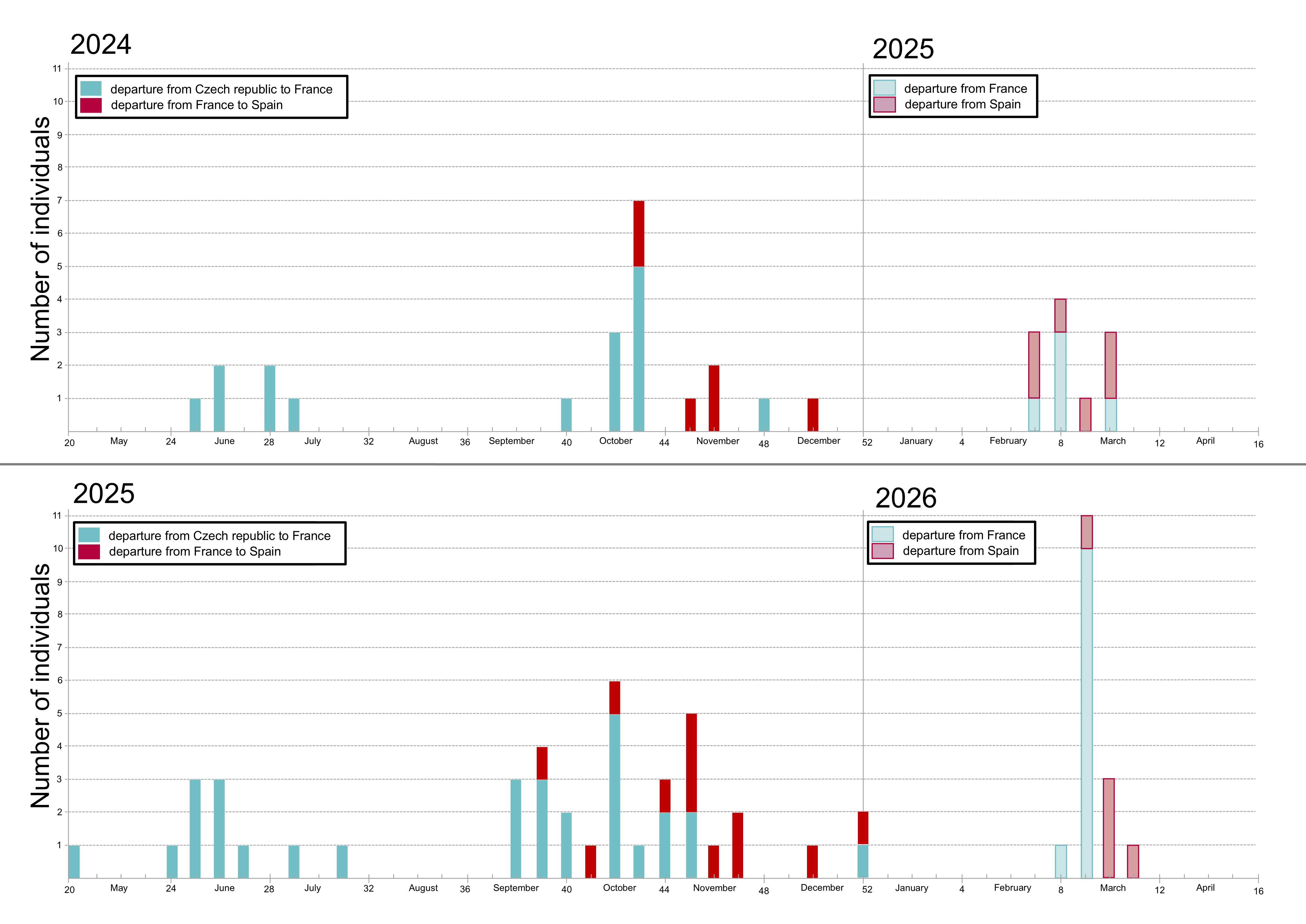
Figure 1: Comparison of the timing of lapwing departures and returns during the two years of tracking.
Another phenomenon accompanying the autumn departure wave is the movement of some lapwings from France to the Iberian Peninsula (mainly to Spain). This year, 12 out of 30 tracked lapwings undertook it, compared with six out of 18 last year. Just as in the case of the summer departures, this is roughly a third of the birds tracked, and once again a surprisingly close match can be found when comparing the two seasons.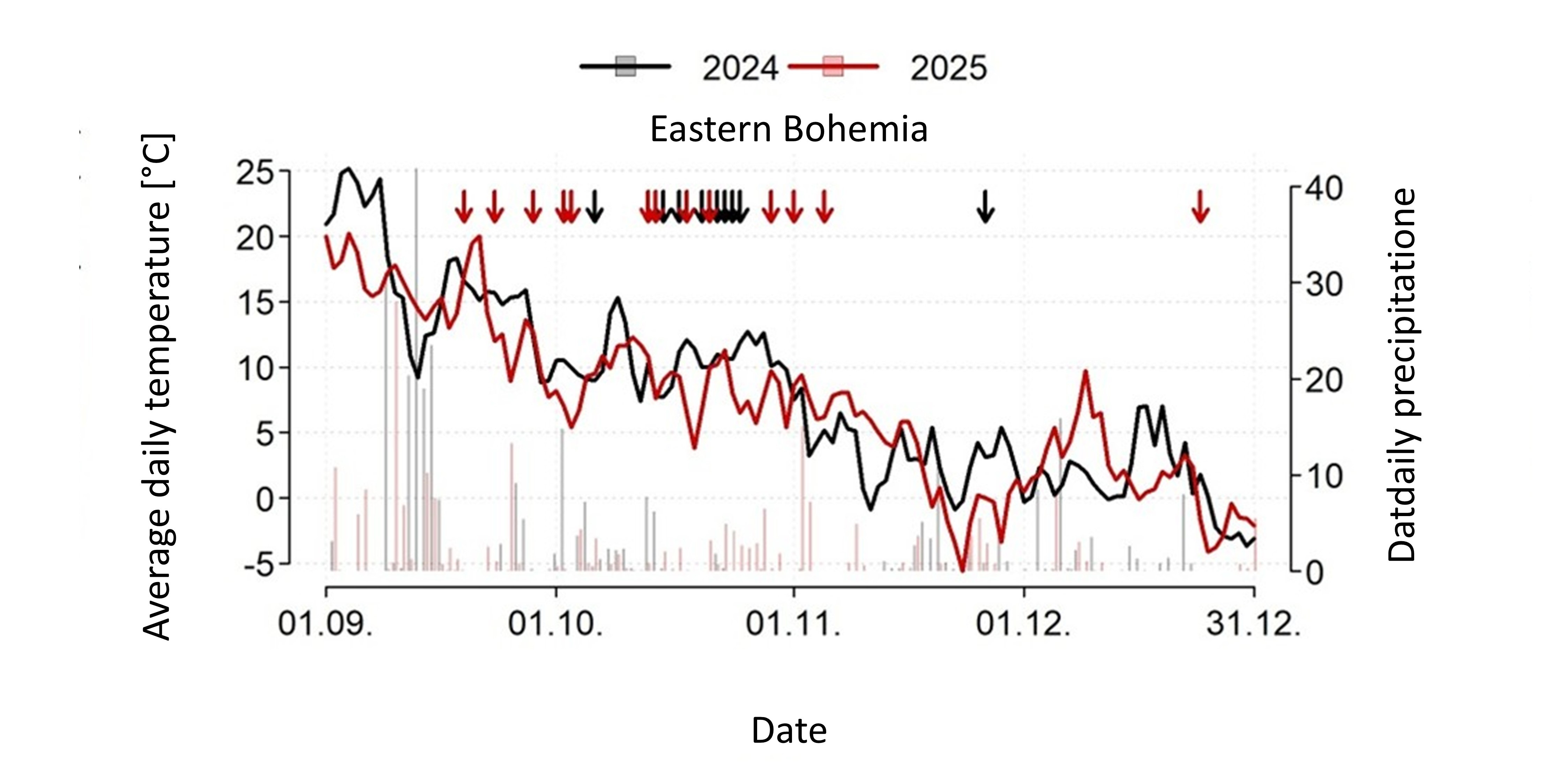
Figure 2: Course of temperatures (lines) and precipitation (bars) in eastern Bohemia during autumn and the beginning of winter in the two years being compared. Arrows, color-coded by year, indicate the departure dates of individual lapwings.
Timing of Spring Return
While autumn migration was similar in its broad outlines in both seasons, spring migration this year was somewhat delayed, but all the more striking in its abruptness (Fig. 1)! Lapwings wintering in France in particular managed to depart essentially within a single week, and the number of days they needed for migration from France to the breeding grounds was several times shorter than last year! Whereas in spring 2025 the average lapwing needed almost 17 days for migration and even the fastest, Lulu, took six days, this year’s average was an incredible 3.9 days, and six days was, in turn, the time taken by the greatest dawdlers, Andreska and Nutela!
You will surely agree that such a dramatic difference positively cries out for interpretation! Were the lapwings waiting for a warm spell (which was indeed taking place in Bohemia on the days of their arrival)? Once again, we can look at the situation in a figure (this time Figure 3), but interpretatively we still cannot fully untangle it. If we focus on France, then last year the median departure date came just before a sharp warming, whereas this year it came only after it. A glance at precipitation may suggest one possible hypothesis. It seems that this year the lapwings waited until the rainy weather had passed. But to confirm whether we have at least got onto the right track with the precipitation, we will need to observe a few more migrations.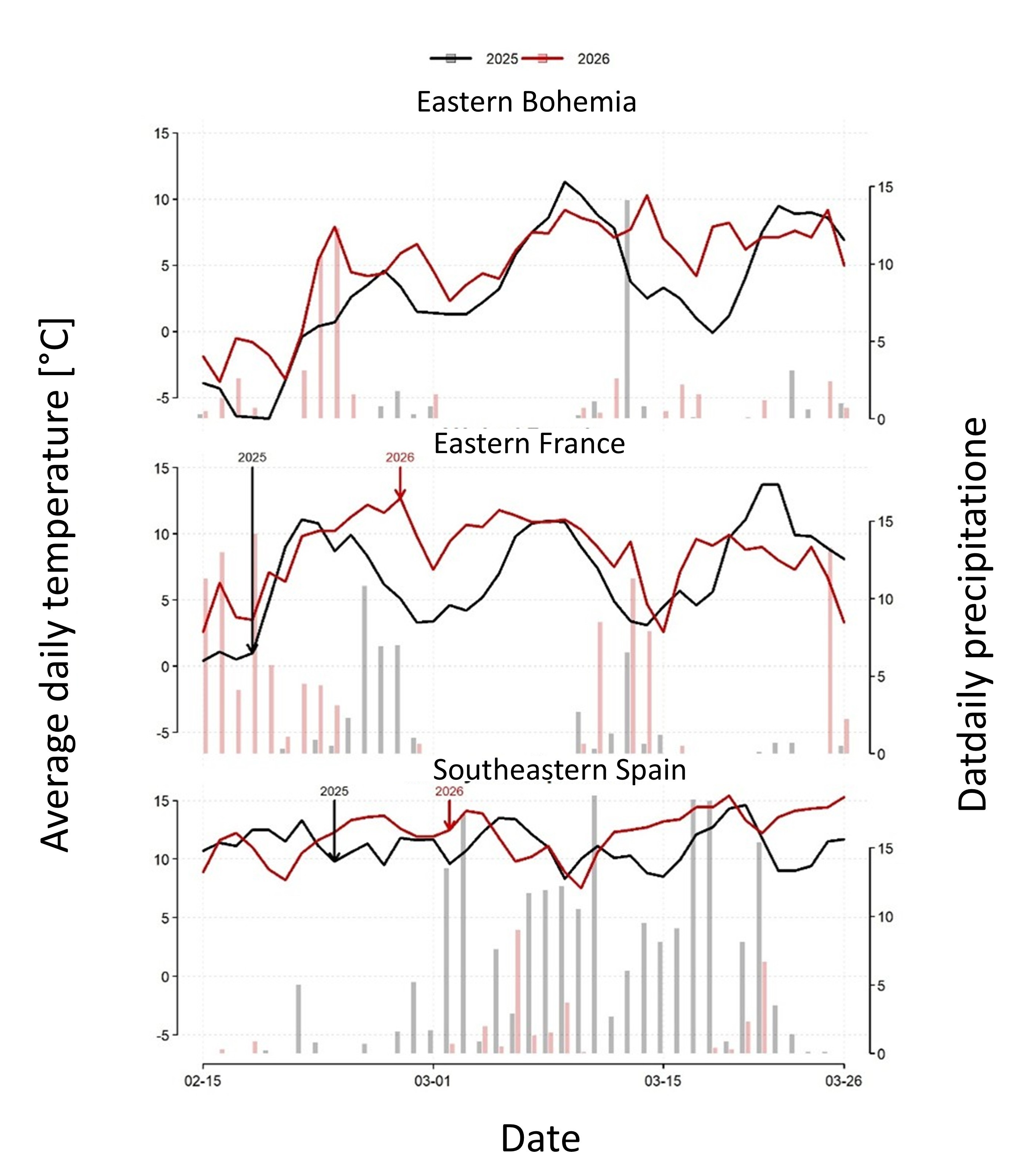
Figure 3: Course of temperatures (lines) and precipitation (bars) at the breeding site in eastern Bohemia, and at the wintering grounds in France and Spain during spring return from the wintering grounds in the two years being compared. Arrows, color-coded by year, indicate the median departure dates from the given wintering ground in each year.
Individual Migratory Habits
Now let us consider whether the timing and course of migration are a matter of individual preference, or rather of the immediate situation in which a lapwing finds itself. We managed to record the timing of departures in two seasons for six - or perhaps seven - lapwings (see Fig. 4). That “perhaps seven” is because of Amálka. Her transmitter fell silent in September 2025, so we do not know the exact date of her second departure; we only know that (as in 2024) she did not leave with the first wave. Of these seven repeatedly tracked lapwings, four departed in the autumn wave in both years, Nerea always with the summer wave, and Gracie and Oliva swapped departure waves between seasons.
This dataset does not provide an entirely clear answer as to whether the timing of autumn migration is individually specific. A logical hypothesis suggests itself, however: could the timing be related to a lapwing’s success in the breeding season? In other words, are those that leave only in autumn the ones that managed, at the last moment, to hatch young and raise them to fledging? It is probably not that simple. For example, Grácie left only in autumn in 2024 even though she had lost her last nest on May 25, whereas in 2025 she departed already with the summer wave even though she was still caring for young in early July. Very probably, then, changes in the timing of departure are determined rather by the current condition of the breeding site, the timing of harvest, and other factors.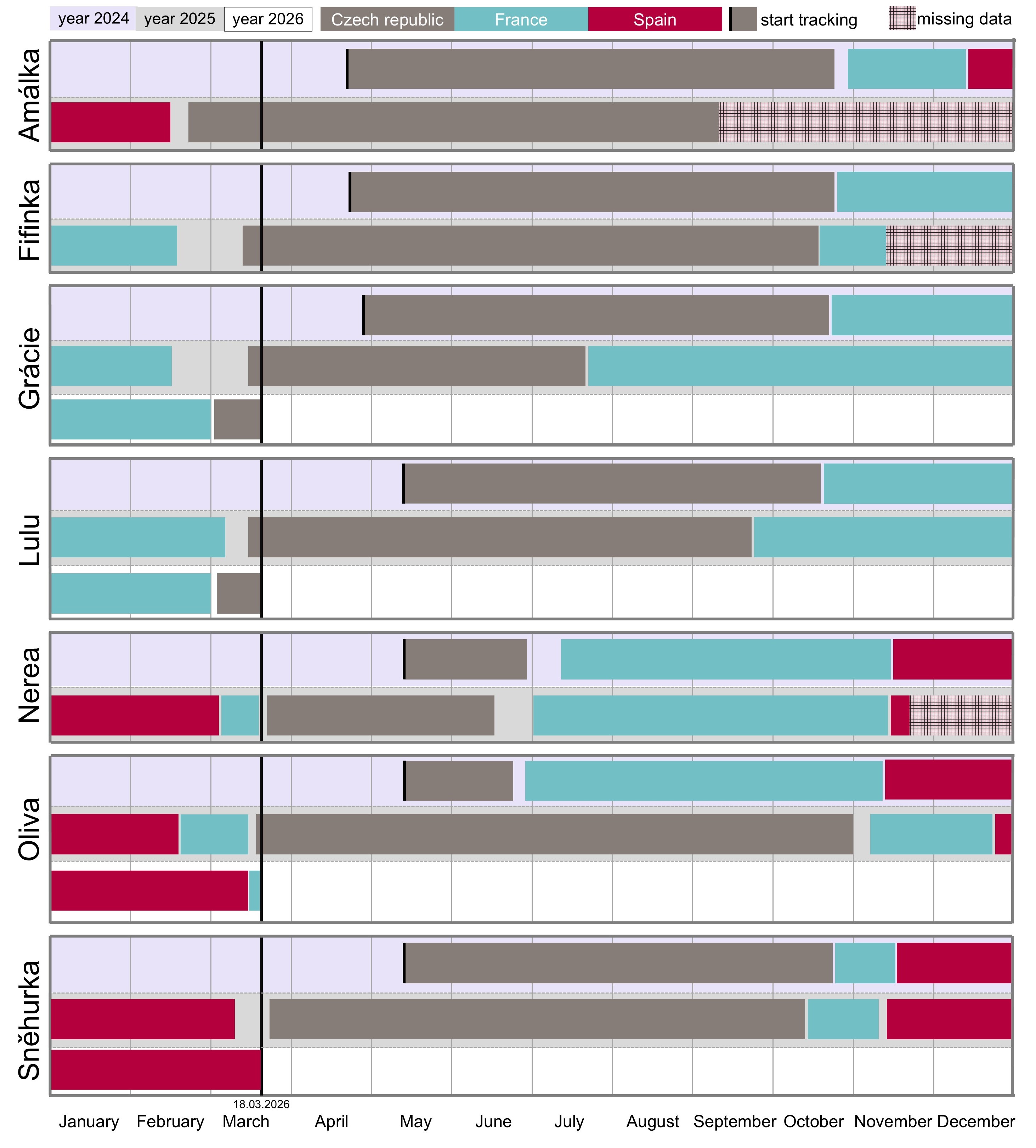
Figure 4: Timing of migratory events for lapwings tracked in both years.
What, by contrast, we can with great probability identify as a true individual preference is the division of lapwings into French girls and Iberian girls. As can be seen from Figure 5, all lapwings tracked in both years, without exception, kept the country in which they wintered, and with the exception of Grácie it can also be said that they kept the region within that country to which they headed. Even in Grácie’s case it is somewhat more complicated, because she too first stopped at the place of her previous year’s wintering site, near the city of Tours. From there, it was only at the beginning of January that she moved south, close to the Pyrenees and the border with Spain. Yet she again showed her attachment to last year’s wintering site by stopping there on her return journey. I would almost bet, therefore, that if we are lucky enough to track her once more next autumn, she will head there again - to the city of Tours.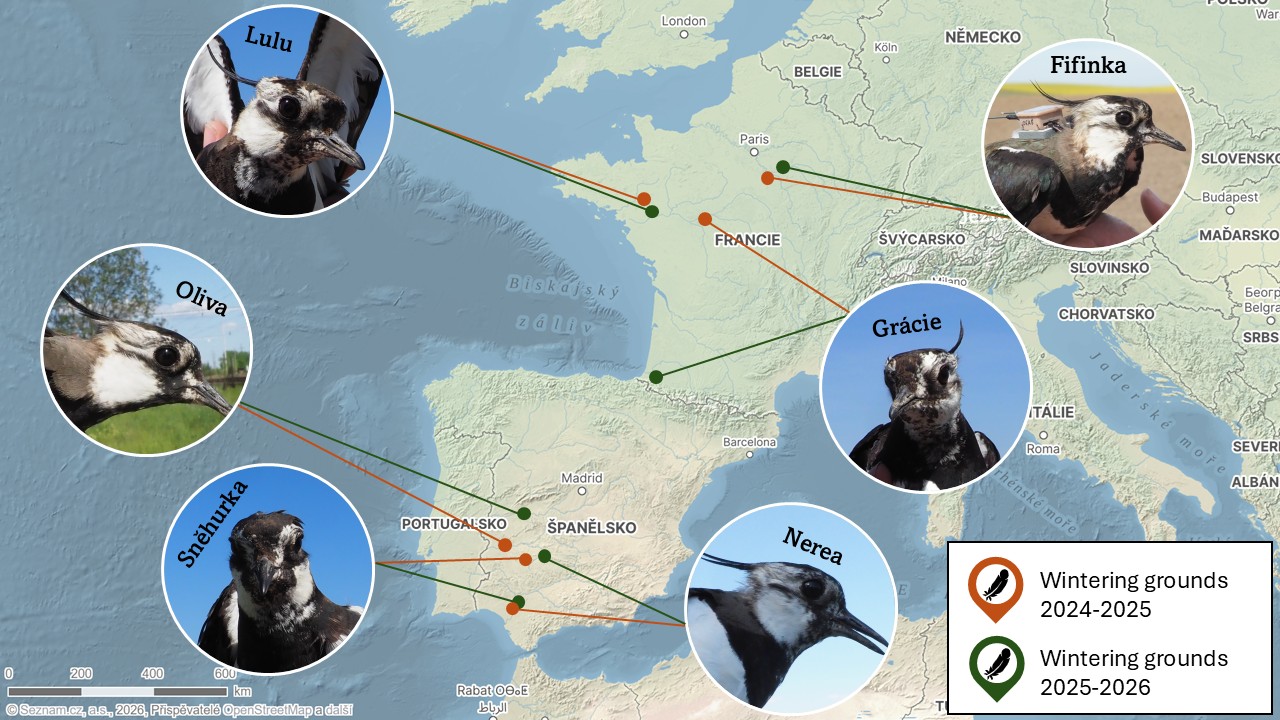
Figure 5: Change of wintering ground between seasons for lapwings tracked in both winters.
As can be seen, the comparison of two migratory cycles has provided some answers quite satisfactorily, while in other questions it has perhaps left us even more confused than before. In the coming months, we will focus mainly on the breeding season, whose onset we await with every flash of spring sunshine. But already now we can look forward to the next migration and wonder how the lapwings will surprise us, and in what respects they will instead confirm what we already suspect. Personally, I have one great wish - to obtain data from the current migration of two individuals in the same flock. We have never yet managed that! So all that remains is to wish our lapwings high breeding success, and all of us a spring full of (not only) avian experiences!